In the Environmental & Field Intelligence sector, hardware is often the bottleneck. Assembling a weather station, calibrating sensors, or building a measurement buoy takes time.
The traditional approach assumes that work on the telemetry portal starts only after the hardware sends its first data packet. Waiting for the hardware wastes time.
At Silentbits, we optimize the integration process. Instead of waiting for physical devices to be deployed, we build the visualization layer alongside the field engineering work. Here is how it works in practice.
Working Solely with API Documentation
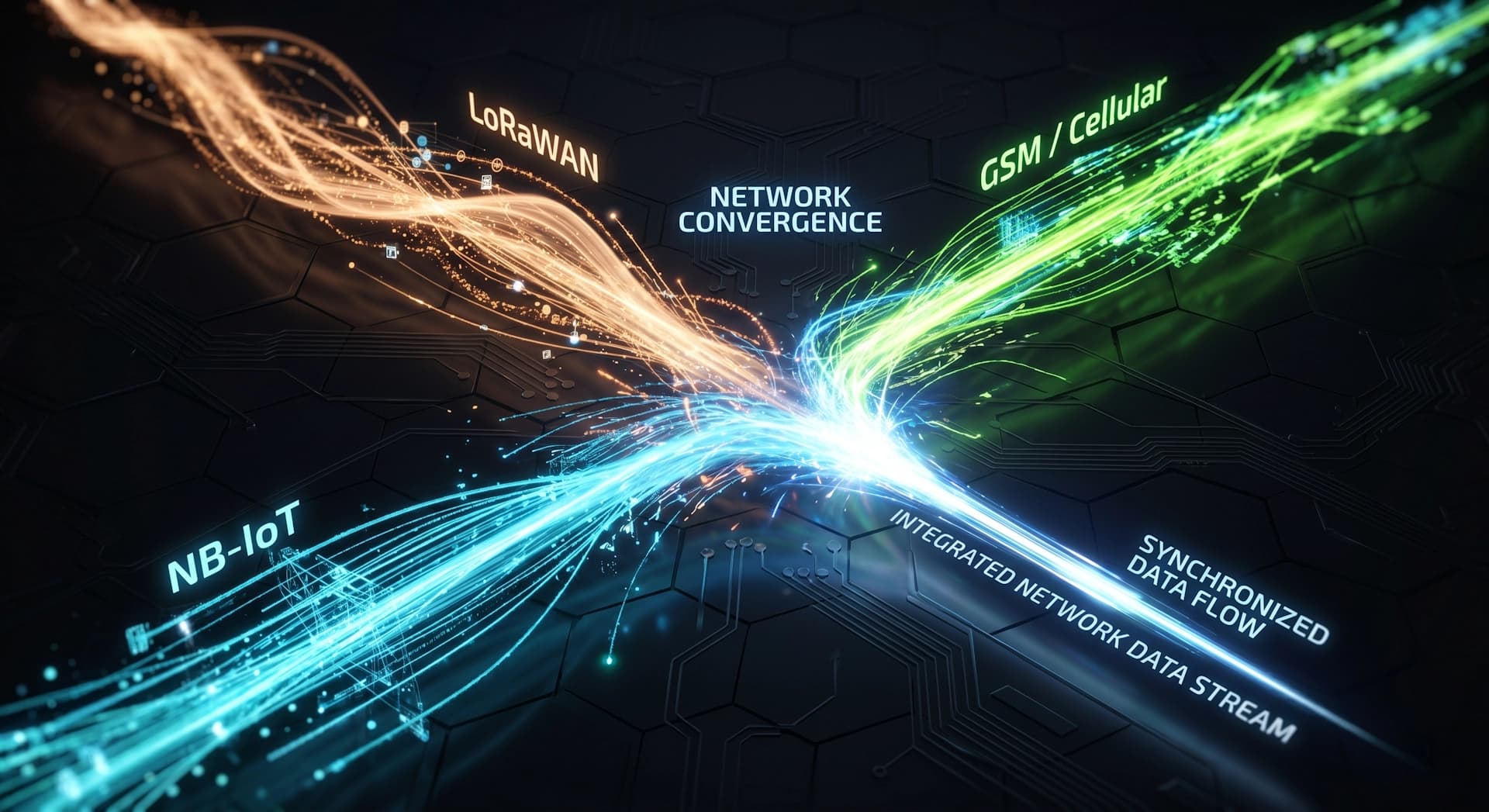
We do not need a physical sensor in the water to start coding. Access to the datalogger's documentation and an API key is enough. Once we know the payload structure - like a JSON sent by a LoRaWAN or GSM module - we know exactly what data format the system expects.
This is the same principle that allows us to remain hardware-agnostic. Because we treat each network as a delivery mechanism rather than a destination, as described in our multi-network unification article, the software layer can accept data regardless of which physical device ultimately sends it.
Mocking Telemetry
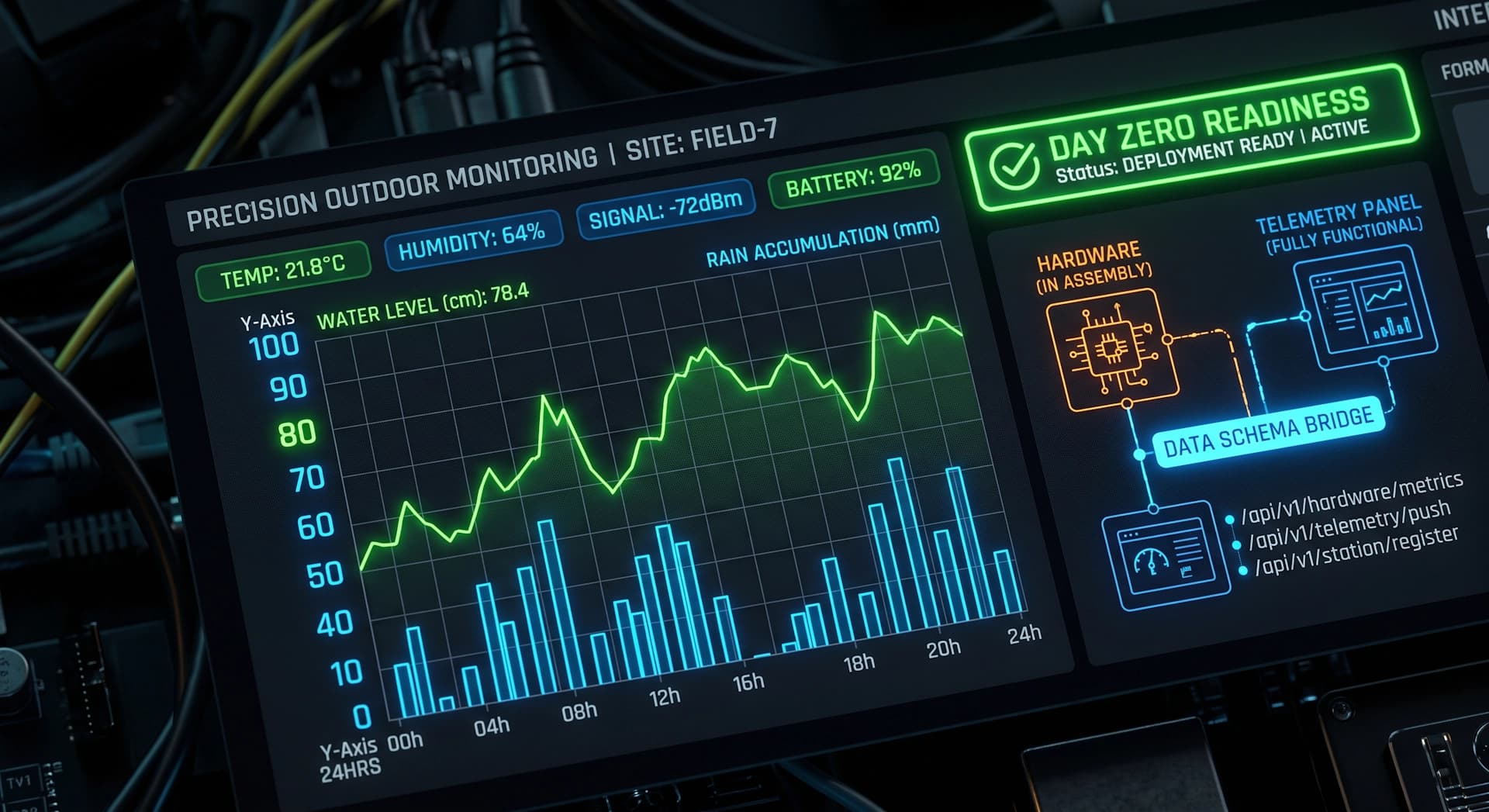
Instead of waiting for real data, we generate simulated data streams that mimic real sensors. We build the database structure and the user interface using Next.js. This allows us to design and test every part of the panel - from water oxygenation charts to anomaly notification systems.
Mocking also surfaces design problems early. A dashboard built for operational data must handle edge cases: missing readings, transmission gaps, and out-of-order packets. Simulated streams let us stress-test those scenarios in development, not in production.
Decoupling Hardware from UI
Operating as a Boutique Studio, we provide custom solutions that are not tied to the strict logic of a specific hardware manufacturer. Separating the front-end from the hardware means that if you decide to change a sensor right before installation, we do not have to rewrite the system. We simply update how the input data is mapped.
This decoupling is the architectural antidote to vendor lock-in. When the visualization layer is independent of the hardware vendor's proprietary cloud, swapping a device model or even an entire manufacturer does not cascade into a UI rewrite. The integration contract is defined by the data schema, not the hardware brand.
Day Zero Readiness
When the hardware is finally placed in the water after testing, there is no transition period. Data immediately flows into a ready, tested telemetry dashboard. The end client receives a fully functioning system from day one.
In field telemetry, software should not wait for hardware, and hardware should not be delayed by UI development. Parallel integration ensures smooth, on-time deployments. If your current process still forces a sequential handoff between field engineers and software teams, the architecture needs to change. See how we approach the hardware independence challenge in our vendor lock-in article, or explore how our telemetry dashboards are built to be ready before the first sensor goes live.