Consider a scenario familiar to many organizations investing in environmental monitoring: a six-figure budget allocated to a network of hydrological buoys from an American manufacturer, meteorological stations from a European supplier, and radar-level sensors from a third vendor. The hardware is exceptional — military-grade precision, IP68 enclosures, years of proven field reliability.
Then the integration begins. Manufacturer A locks telemetry behind a proprietary cloud platform with an annual subscription. Manufacturer B offers a separate dashboard with its own authentication. Manufacturer C delivers raw files to an FTP server. Three vendors, three data ecosystems, zero interoperability.
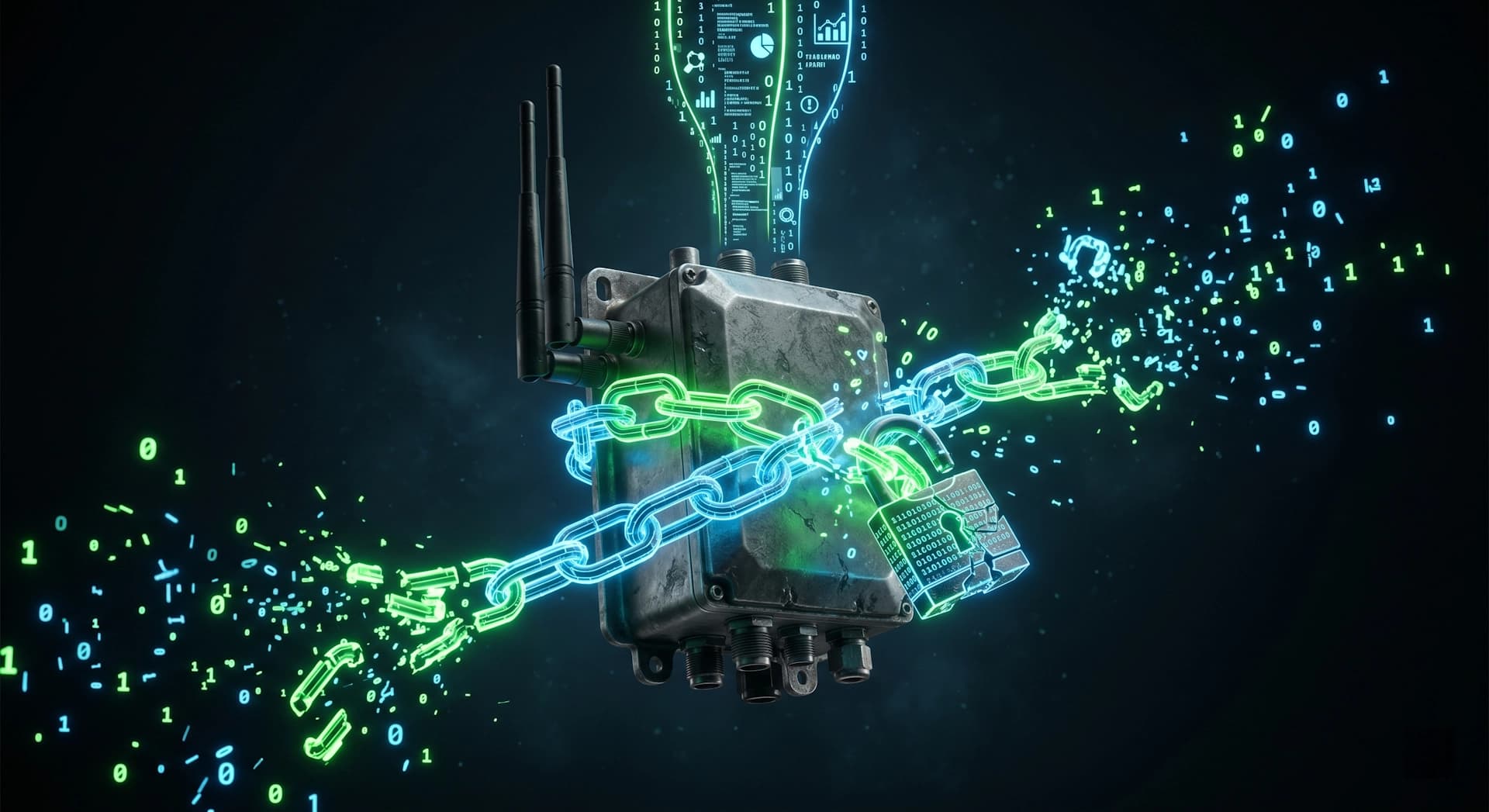
This is Software Vendor Lock-in in the IoT sector. The hardware belongs to you. The data it generates belongs to you. But the ability to access, correlate, and act on that data is controlled entirely by the companies that sold you the sensors.
The Hidden Cost of Proprietary Ecosystems
Hardware manufacturers design excellent physical instruments. That is their core competency. But increasingly, they bundle software platforms — cloud dashboards, mobile apps, subscription tiers — as a secondary revenue stream. The business model is straightforward: sell the sensor once, charge for data access indefinitely.
For an organization operating a single vendor's equipment, this may be acceptable. The moment you deploy hardware from multiple manufacturers — which is the reality of virtually every serious monitoring network — the costs compound in ways that are not immediately visible on a purchase order:
- Multiple annual software subscriptions, each with separate licensing terms and renewal cycles.
- Operator training and credential management across disparate platforms.
- No unified alerting — a critical threshold on one system cannot trigger a response in another.
- Complete dependency on each vendor's roadmap, uptime guarantees, and pricing decisions.
The capital expenditure on hardware is a one-time decision. The operational expenditure on fragmented software access is a recurring constraint that compounds every fiscal year.
Data Silos: The Operational Symptoms
The technical manifestation of vendor lock-in is data silos — isolated pools of information that cannot communicate with each other. In environmental monitoring, the consequences of this fragmentation are particularly severe.
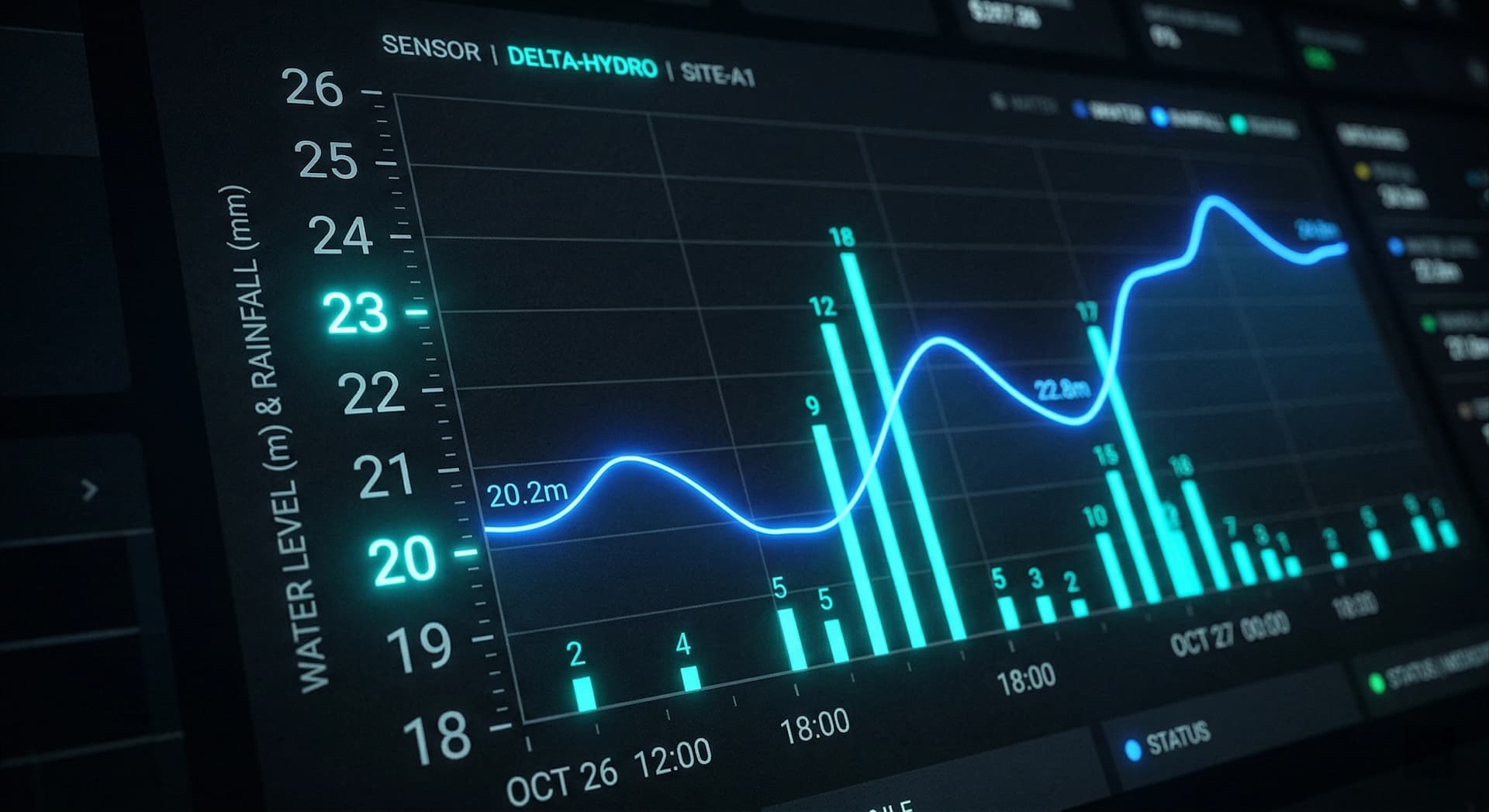
No cross-source correlation. A hydrologist needs to overlay rainfall intensity against river level rise on a single timeline. When rainfall data lives in one vendor's cloud and water level data in another, this fundamental analysis requires manual CSV exports, spreadsheet manipulation, and hours of an engineer's time. What should be a glance at a real-time dashboard becomes a weekly reporting exercise.
Fragmented alerting and oversight. Operations teams must monitor multiple platforms simultaneously. Battery health warnings appear in one system, connectivity status in another, and measurement anomalies in a third. This distributed attention model guarantees that critical warnings are missed — not because the systems failed to generate them, but because no single operator can watch three screens at once.
No ownership of the client relationship. If you are a systems integrator or hardware distributor, vendor lock-in means you cannot offer your end clients a branded, unified experience. You are forced to redirect them to third-party platforms — effectively handing over the most valuable part of the relationship: the data layer.
The Hardware-Agnostic Approach
The solution is architectural, not incremental. Physical sensors — sondes, radar gauges, anemometers — should do exactly what they were engineered to do: measure parameters in the field with precision. The analytical and visualization layer must be entirely decoupled from the hardware vendor.
At Silentbits, we call this a Hardware-Agnostic architecture. The principle is straightforward: we build dedicated integration parsers for each manufacturer's data interface — whether that is a REST API, MQTT broker, FTP drop, or proprietary protocol. The parsers extract, normalize, and ingest data into a single, client-owned database.
The result is a clean separation of concerns. The hardware vendor is responsible for measurement accuracy and physical reliability. The software platform is responsible for aggregation, visualization, alerting, and analysis — independently of who manufactured the sensor.
This also means that when a better or more cost-effective sensor enters the market, you can swap hardware without rebuilding your entire software stack. Your data history, alert configurations, and user access remain intact. True vendor independence is not just about avoiding subscription fees — it is about preserving organizational agility.
Single Source of Truth in Practice
We applied this architecture at scale when building Wodowskaz — a nationwide hydrological monitoring system that aggregates data from three fundamentally incompatible hardware ecosystems into a single, high-performance web platform.
The integration required custom parsers for each data source, a unified PostgreSQL time-series store, and domain-specific telemetry dashboards that present correlated data across all sensor types. An operator can now view river level, rainfall, and atmospheric pressure on a single screen — regardless of which manufacturer produced each sensor.
The ingestion layer uses a watermark-based synchronization strategy to guarantee zero data loss, even when field devices operate intermittently due to GSM blackouts or power-saving cycles. This is critical in remote deployments where connectivity cannot be taken for granted.
The outcome: a centralized data ecosystem that the client fully owns, with no recurring license fees to hardware manufacturers for accessing their own measurements.
The White-Label Opportunity
For systems integrators and hardware distributors, breaking free from vendor lock-in opens an entirely new business model. Instead of being a reseller who redirects clients to third-party clouds, you become the platform owner.
A white-label monitoring platform — branded with your company identity, hosted on your infrastructure — transforms you from a hardware middleman into a full-service provider. Your clients log into your system, see your brand, and associate the data intelligence with your organization, not with the sensor manufacturer.
This is not a theoretical differentiator. In competitive tenders for public infrastructure monitoring, the ability to offer a unified, branded platform alongside multi-vendor hardware support is increasingly a deciding factor.
Precision hardware deserves a precision software layer — one that you control. If your monitoring infrastructure spans multiple vendors and your teams spend more time exporting CSVs than analyzing data, the architecture is working against you. Explore how we solved this in the Wodowskaz case study, where three incompatible ecosystems became one unified intelligence platform.