The role of environmental monitoring is shifting. Historically, telemetry data was meant for internal eyes only — a closed loop where engineers monitored pumping stations, water levels, or air quality on private screens. Today, the landscape is entirely different.
If you are an integrator bidding on municipal or institutional tenders, you already know the new reality. Public institutions no longer just buy hardware; they buy transparency. They require public-facing widgets for citizens, live IFrames for city portals, and massive historical data exports for researchers.
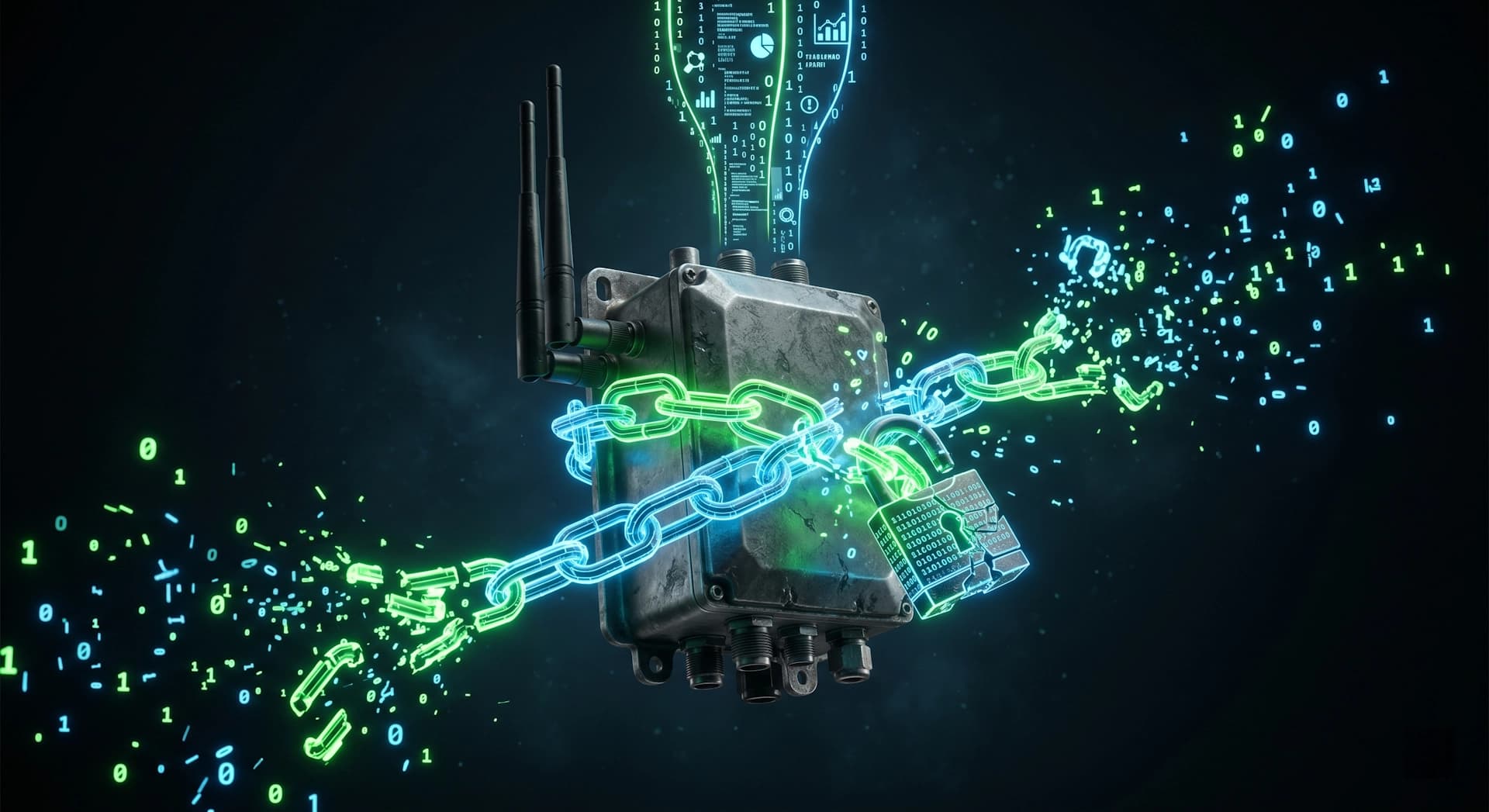
This creates a severe operational bottleneck. When you try to force a closed, proprietary hardware cloud to act as a public data portal, the architecture breaks.
The Integrator's Dilemma: Heavy Reads on Closed Systems
Hardware manufacturers build their cloud platforms for device management, not for public data distribution. They are optimized for writing data (ingestion), not for serving thousands of read requests from citizens checking local river levels.
When an integrator tries to fulfill a public tender using out-of-the-box vendor software, they hit three immediate walls:
- API Rate Limits: Vendor clouds severely limit how often data can be requested. A sudden spike in public traffic (e.g., citizens checking flood warnings) will result in API throttling, bringing the dashboard down exactly when it is needed most.
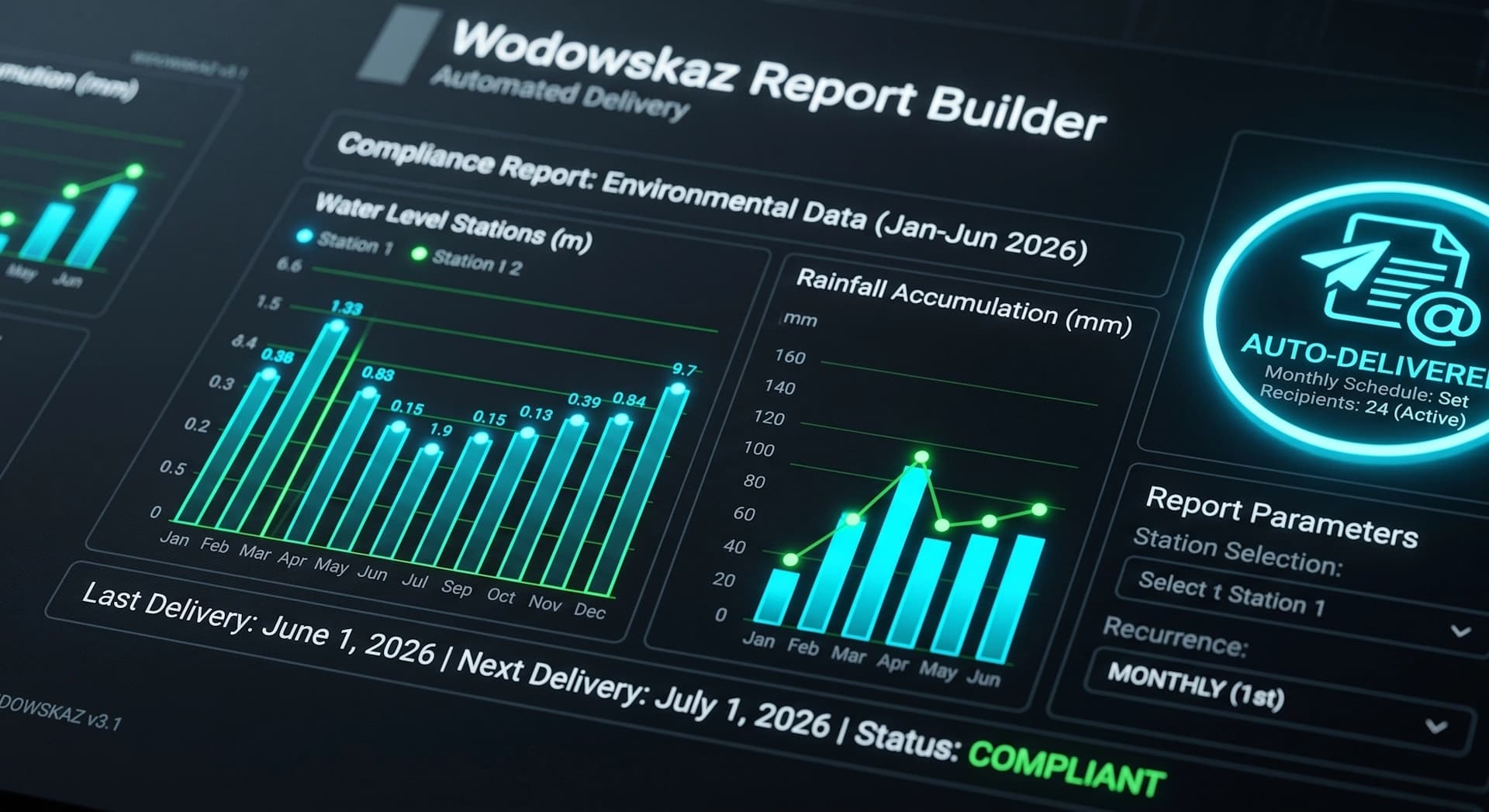
- Export Limitations: Institutional researchers do not want pretty charts; they want raw data. When scientists need a 6-month historical export featuring multiple parameters (e.g., level, flow, and battery voltage simultaneously), proprietary dashboards usually crash, time out, or restrict exports to 30-day, single-parameter CSV files.
- Security Risks: You cannot give a city official or a university researcher administrative access to your core IoT platform just so they can download a report.
The Architectural Fix: Decoupling Ingestion from Distribution
To solve this, Silentbits utilizes a decoupled architecture specifically designed for public telemetry. The ingestion engine (which talks to the sensors) and the distribution engine (which talks to the public) must be physically and logically separated.
Instead of routing public traffic directly to the core database or the vendor’s API, we build lightweight, read-only endpoints:
- For the Public: We deploy edge-cached IFrames and widgets. When a municipality embeds a water-level chart on their homepage, the traffic hits a cached layer, not the database. Whether ten people or ten thousand people view the widget, the load on the core IoT system remains exactly the same.
- For the Researchers: We implement dedicated, asynchronous export microservices. When a hydrologist requests a complex, multi-parameter CSV file spanning 6 months of data, the query is offloaded. The database uses indexing and materialized views to gather the data without locking up the system for other users, delivering a clean, readable file.
The Business Value: Winning Public Tenders
For systems integrators, this architectural shift is a massive competitive advantage.
When you bid on a tender, you are no longer just selling a mast, a solar panel, and a radar sensor. You are offering a fully branded, high-performance “Public Data Portal”. You can guarantee the municipality that their citizens will have real-time access to environmental data without downtime, and you can guarantee the local university that their scientists will get their 6-month CSV exports without arbitrary platform restrictions.
By owning the software layer, you dictate the rules of data distribution. You stop fighting with vendor API limits and start delivering exactly what the institutions are paying for: accessible, reliable, and secure environmental intelligence.
Precision hardware deserves a precision software layer — one that scales seamlessly from a single engineer to a city of a million citizens. If your current monitoring stack struggles with data exports or public access, it is time to rethink your architecture. See how we approached the full data ownership challenge in our vendor lock-in article, or explore how our telemetry dashboards are designed to serve both engineers and the public.